Essentials of dairy farming
Smarter systems for a resilient future
Modern dairy farming is built on six essentials: milking, feeding, housing, health, reproduction, and farm operations management. Every dairy farm relies on them every day. What has changed is how difficult it has become to manage them well – and how tightly they are now connected.
As herds grow, labour becomes harder to find, and expectations around animal welfare, milk quality, and sustainability increase, farms need more than incremental improvements. They need systems that deliver consistency, earlier insight, and confident decision-making.
This is where smarter dairy farming begins.
From individual tasks to connected systems
For generations, dairy farms managed each essential largely on its own – compensating with experience, observation, and long working hours. Today, that model is under strain.
Small issues now escalate faster:
- feeding affects milk yield, fertility, and metabolic health
- housing shapes cow behaviour, hygiene, and milking outcomes
- health and reproduction influence labour demand and long-term profitability
Modern dairy performance depends on how well these essentials work together.
Innovation, in this context, is not about adding layers of complexity; it is about reducing variability, supporting stable routines, and helping farmers act earlier – before small deviations become costly problems.

Innovation focused where impact is greatest
Not all areas of the dairy farm carry the same structural pressure. Some are far more sensitive to labour availability, biological variation, and timing. These are the areas where innovation has the greatest impact on overall farm performance.
Across the five essentials, three capability areas consistently prove decisive:
- Automation, where consistency is critical
- Intelligence, where performance must adapt cow by cow
- Precision, where early signals change outcomes rather than late intervention
By advancing these capabilities, it becomes possible to improve not just individual tasks, but the entire dairy production system.
Milking at the centre of the system
Why this is where innovation starts
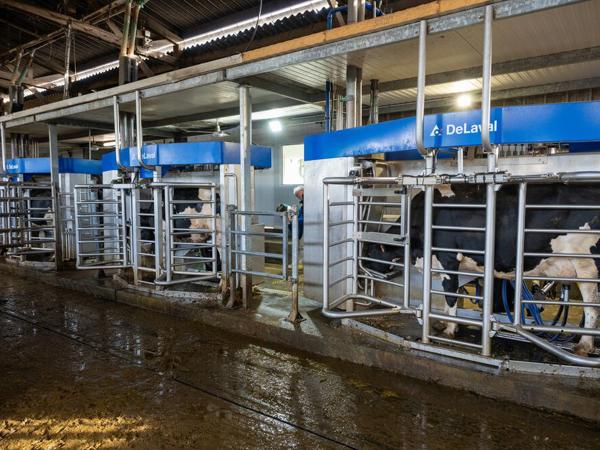
Milking remains the economic engine of the dairy farm – but its importance goes well beyond milk volume.
It is the point where:
- animal welfare becomes visible
- milk quality is safeguarded
- labour pressure is felt most directly
- large volumes of data are generated every day
As farms scale up, maintaining consistent milking routines becomes both more important and more challenging. Labour shortages and variability make traditional approaches harder to sustain.
This is why innovation in automatic and intelligent milking systems is so central to the future of dairy farming. Automation supports consistency and reduces dependence on labour. Intelligence builds on this by adapting the milking process to individual cows and using each milking as a source of insight for the wider farm.
“The breakthrough isn’t automation on its own. It's what consistent milking enables everywhere else on the farm.”
Solution Manager, Milking
Innovation focus
- Automatic and semi-automatic milking to support stable routines as labour becomes scarce
- Intelligent milking to optimise performance at cow and group level
- Milk-based insight that informs feeding, health, and reproduction decisions
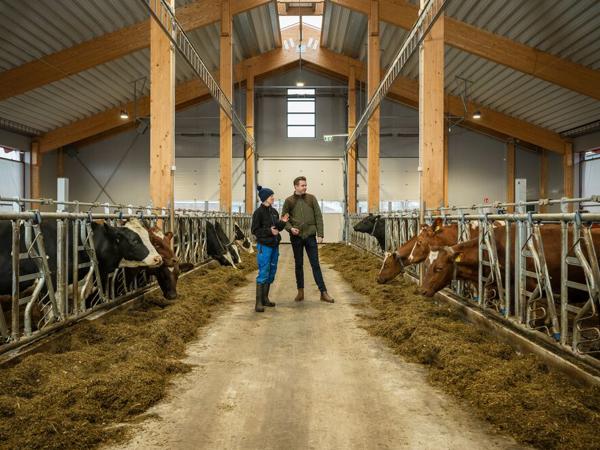
Housing
The environment that makes everything else work
Housing is not simply infrastructure. It is the operating environment for every essential on the dairy farm.
Cow flow, resting behaviour, hygiene, and access to resources all influence how well milking routines, health strategies, and reproduction programmes perform. Poor housing quietly undermines performance; good housing allows systems and technology to deliver their full value.
While housing innovation often happens through design and management rather than digital tools, it plays a decisive role in supporting consistent routines and welfare-focused dairy farming.
“Technology only works at its best when the environment supports natural cow behaviour.”
Systems perspective
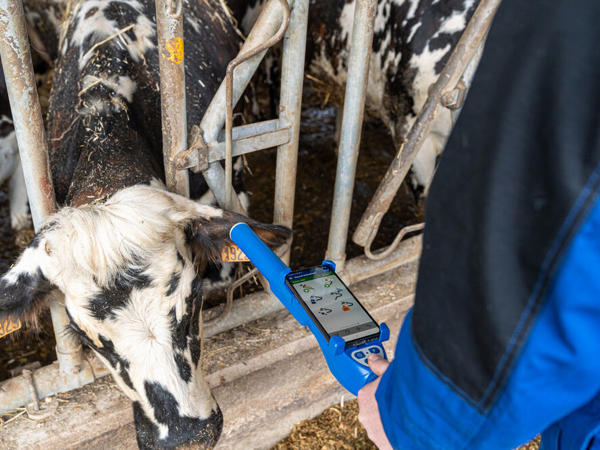
Reproduction
Earlier insight, better timing
Reproductive performance shapes herd structure, replacement rates, and long-term efficiency. In large herds, however, reproduction is one of the hardest essentials to manage consistently.
Missed heats, delayed detection, or inconsistent follow-up quickly increase workload and reduce productivity. The challenge is not knowledge, but visibility and timing.
When fertility insight is integrated into daily routines – supported by behaviour data and performance trends – reproduction management becomes a natural part of the wider system rather than a separate task.
“Good timing nearly always beats later correction.”
Solution Manager, Herd Management
Innovation focus
- Precision animal management to support more confident, timely fertility decisions
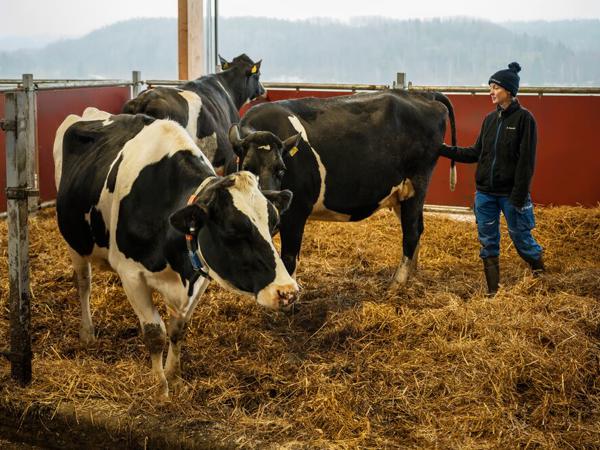
Health
From reacting to preventing
Most herd health issues do not appear suddenly. They develop gradually, showing up first as small changes in milk, behaviour, or performance.
In modern dairy farming, the challenge is recognising those early signals across large herds and responding in a structured way – without increasing workload.
Innovation in animal health focuses on early detection, prioritisation, and consistency, helping farmers maintain herd health as part of everyday management rather than reacting to problems after they escalate.
“Early insight changes the conversation – from treating problems to managing health.”
Director, Milk Quality & Animal Health
Innovation focus
- Precision animal management and milk-based analytics to support preventative herd health strategies
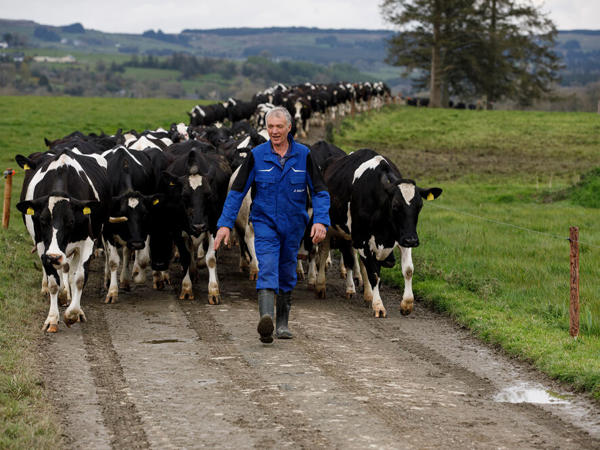
Farm operations management
Where everything comes together
Farm operations management sits above the individual essentials – connecting people, animals, equipment, and data into one coordinated system.
While milking, feeding, housing, health, and reproduction are all important, it is how they are managed together, day by day, that truly drives farm performance.
As farms grow and become more complex, this becomes harder to manage. More animals, more data, and more moving parts increase the risk of things becoming disconnected – where information exists, but is not linked, and decisions are made separately rather than as part of the whole farm.
This is where modern farm operations management becomes essential. Not as extra work, but as a way to simplify daily tasks and support clearer, more structured decision‑making.
Innovation focus
- Supporting consistent daily performance through connected farm operations
Why this matters for the future of dairy farms
The five essentials have always defined dairy farming. What is new is how interconnected they have become – and how little margin there is for delay or inconsistency.
By advancing automation, intelligence, and precision where they matter most, dairy farms can:
- stabilise performance as operations grow
- reduce reliance on scarce labour
- improve animal welfare and milk quality
- act earlier with greater confidence
- build long-term resilience
This is what smarter dairy farming looks like in practice.
Proven on real dairy farms
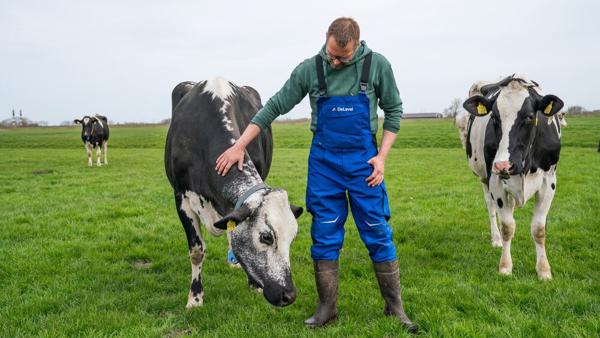
Innovation only matters if it works in everyday conditions. Customer stories show how farmers use these principles in real operations – what they changed, how it fits their routines, and what makes the difference on their farms.
Bringing it all together
The five essentials form the foundation of dairy farming. Smarter systems connect them – turning daily routines into insight, reducing variability, and supporting better decisions across the whole farm.
The goal is not complexity, but clarity.
Predictable performance today, and resilience for the future.